080
Residence at Cherthala
Location: Cherthala, Kerala
Type: Residence
Status: Ongoing
Area: 1090 sqft
Client: Syam Sreesylam, Neha Miria
Collaborator(s): Reform constructions, Jose Micheal
Design Team:
Madhushitha CA, Lijo John Mathew, Nandagopal M
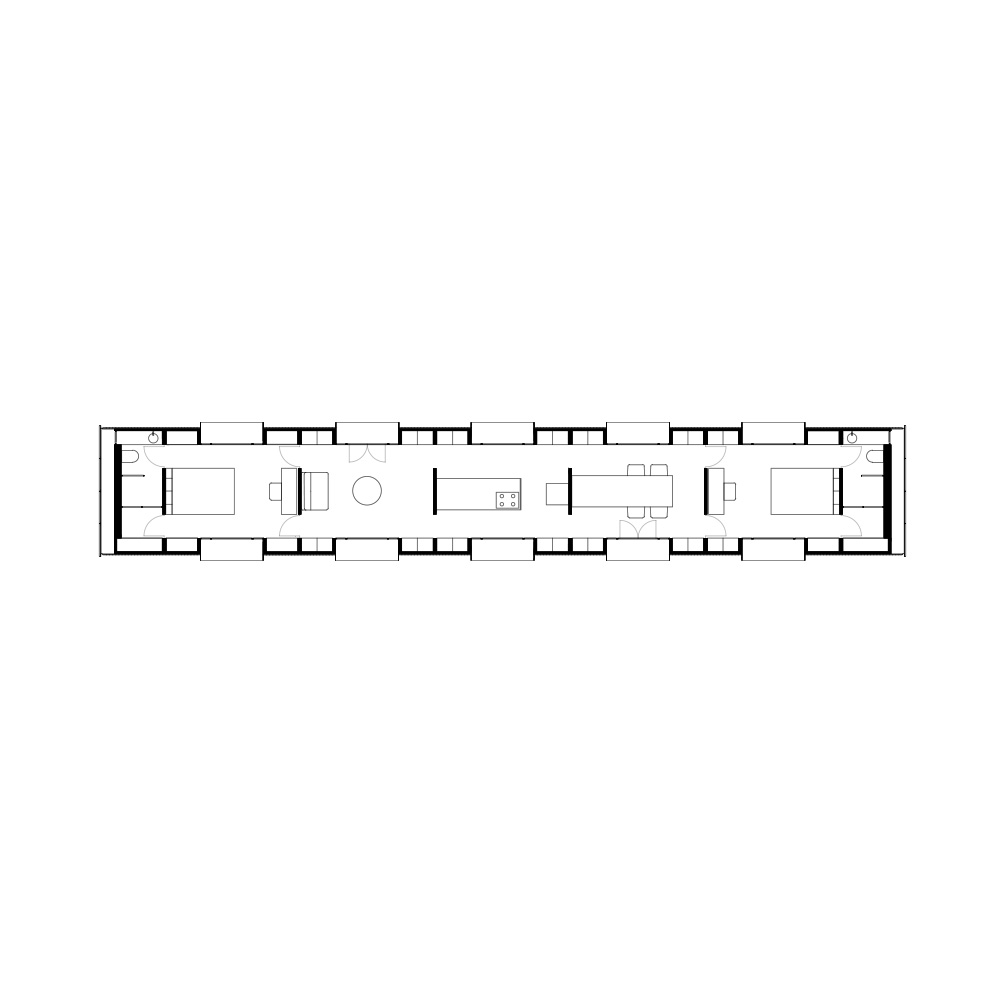
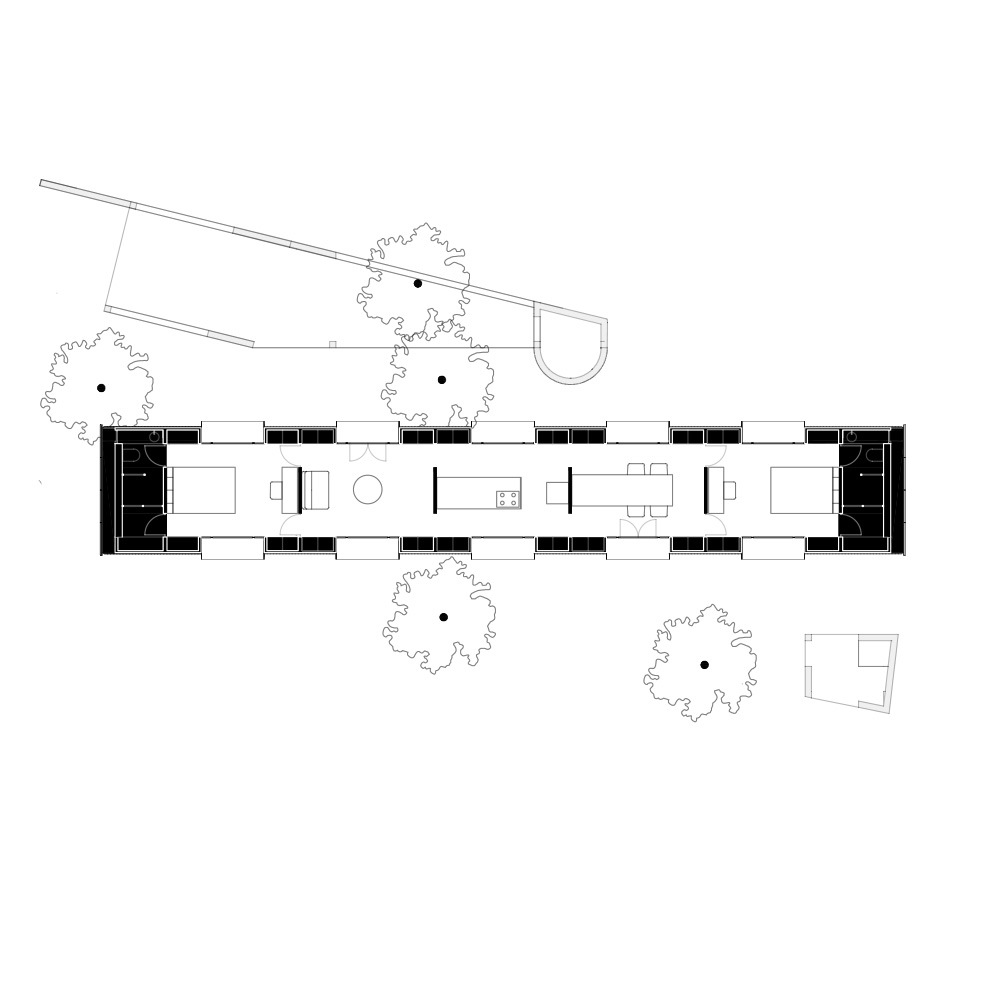
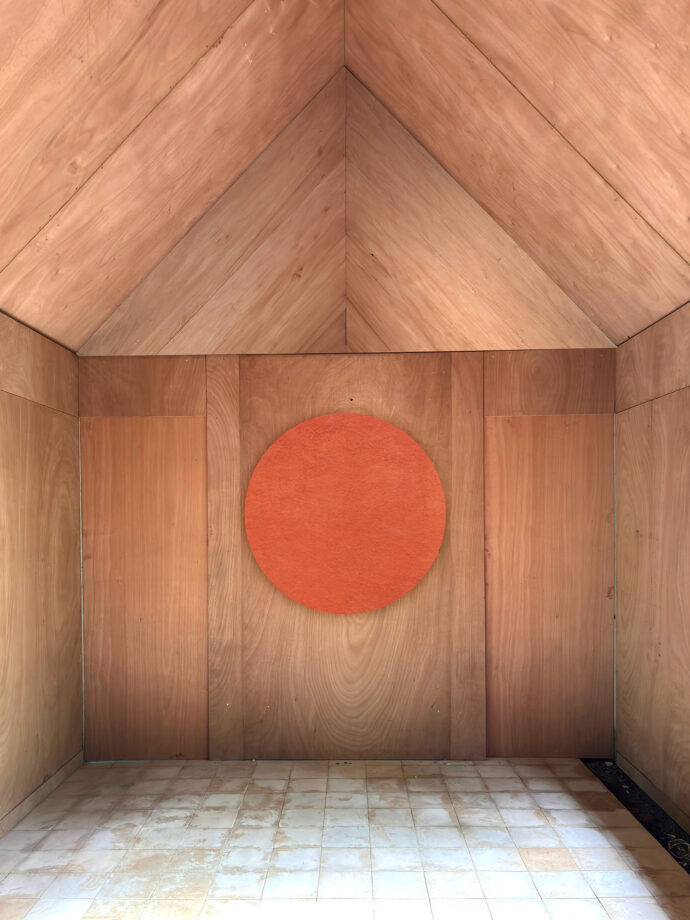
The residence at Cherthala is a critical experiment in an ongoing investigation that we engage in within our practice; of a non-hierarchical, inherently democratic and seemingly infinite, multiplying space. Taking inspiration from works such as Andrea Branzi’s No-Stop City and Superstudio’s grid, we perpetually experiment on the idea of the universal room that is devoid of programme and context. Resembling the traditional houses of Kerala which are organised in a series of rooms one after the other, the rooms in this atelier house also follow a strict linear order. Not only are they identical in size and volume, they are interchangeable in regard to function. It can turn from an intimate bedroom to the social space of a kitchen to the entertainment venue of the living room. The use of mirror surfaces in the last room also creates the illusion of an infinitely extending space alluding to the monumental landscapes of Superstudio.
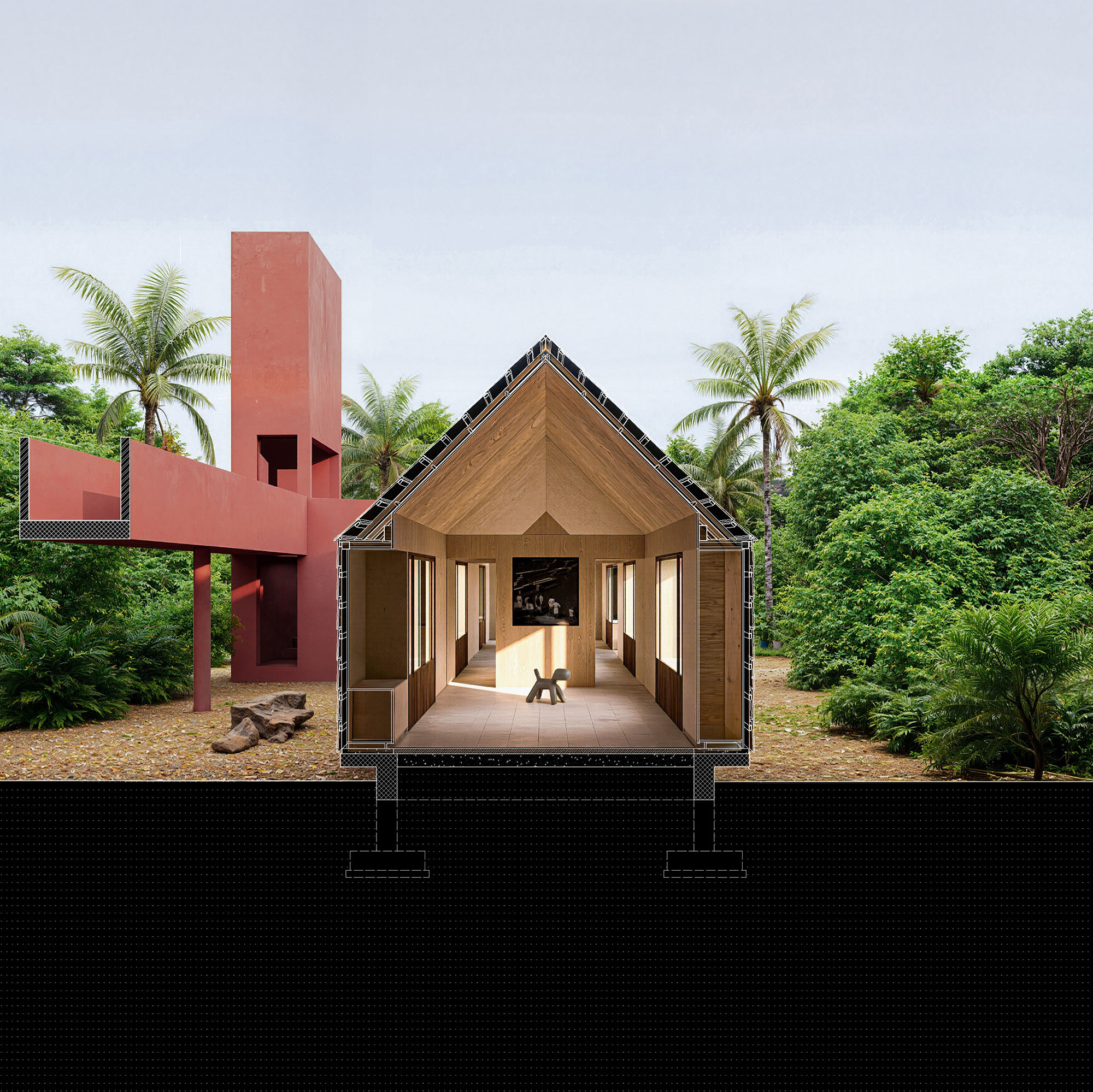
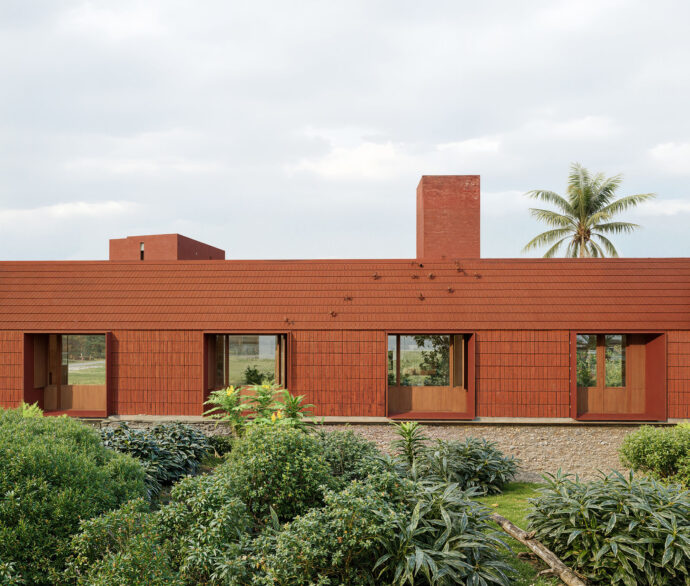
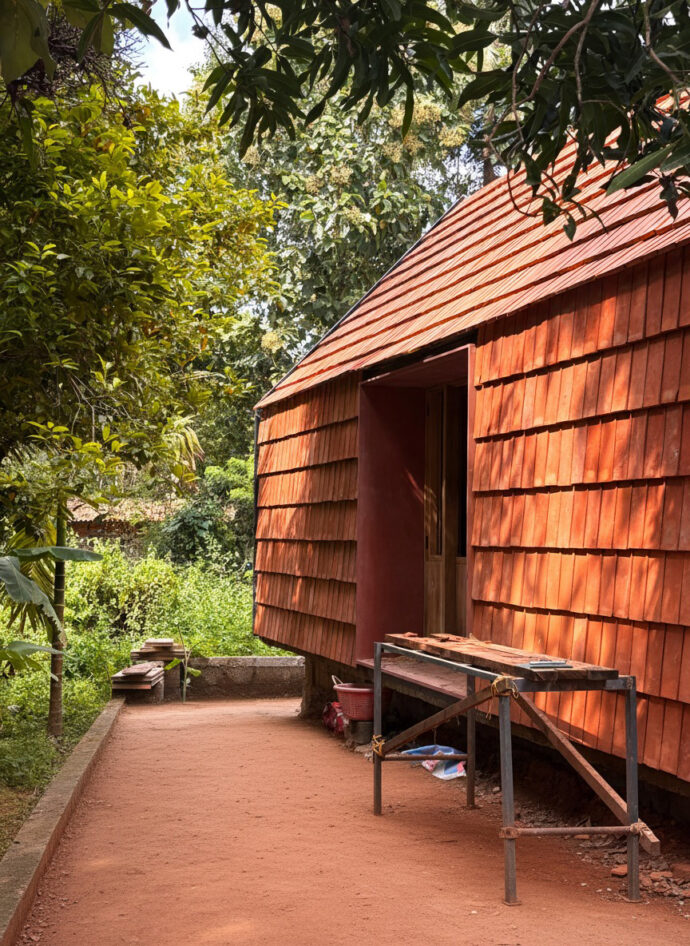
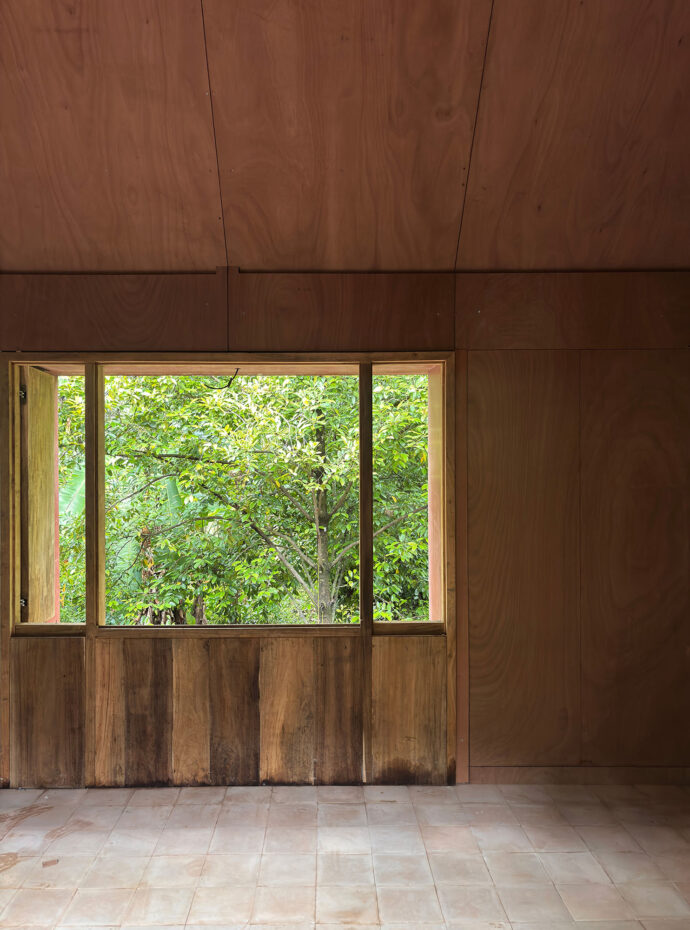
In order to emphasise the similarity of the rooms, the entire built structure is imagined as a monolith by restricting the building to a limited palette of materials. The walls and roofs are both made of terracotta tiles, endemic to the tropical context. The windows opening in the monolithic form are lined with red sandstone to camouflage them into the singular form. The alignment of the doors and windows in the form also allows much needed cross ventilation providing climatic comfort within the house. On the inside, the surface is lined with birch plywood on the walls and ceiling and cement tile flooring in matching colour.
The form is imagined as a line and a tower. The linear block is placed as a diagonal to avoid the trees within the site and the tower acts as an annex and studio for the Architectural photographer Syam. The similar monolithic language of the material is followed but this time, replacing the cement tiles with red oxide for the flooring. This project is also one of the most successful collaborative projects we have worked on. The concept was developed in conversation with the client, the tiles were customised and specifically design built for this project by a vendor. We also worked with an artist whose hand modelled terracotta animals adorn the monolithic form. This way, the building also becomes a collage representing the cultural and craft heritage of the place. The attempt was to create a form, modelled after agricultural barns, that stands apart in the individuality of its form, a defined architectural object but also something that can be as much a part of its environment.